Sunday, 1 November 2015

Kammas pride: AP and Tamilnadu's first private sector Medical and Engineering colleges

Kammas Pride:


Tamilnadu:


In 1966, GR Govindarajulu took the initiative to start the first private medical college in Tamil Nadu along with the Lakshmi Group. Land was purchased and a medical college building was constructed in 1966. The medical college was managed by both the PSG and Lakshmi Groups till 1969, when it was taken over by the Government of Tamil Nadu and renamed as Coimbatore Medical College Hospital.


PSG College of Technology is an autonomous, government aided, private engineering college in Coimbatore, India. It is affiliated to Anna University. The college offers a total of 48 full-time and part-time programs in Science, Engineering and Management at undergraduate and postgraduate levels. The college was founded in 1951 by Dr.G.R.Damodaran as the first private engineering institution established in Tamil Nadu.


Andhra Pradesh:


Velagapudi Ramakrishna Siddhartha Engineering College is the First Private Engineering College in the state of AP, 1977. It is also the First institution in the private sector in the entire state to start M.Tech programmes (1999)


Siddhartha Medical College was the First private Medical College in the state (1980-81), later taken over by the Government of AP and renamed as Dr. NTR University of Health Sciences 


Kommareddy Venkata Sadasiva Rao Siddhartha College of Pharmaceutical Sciences (1994) is the First Private Pharmacy college in the state

G R Damodaran: Educationist and Parliamentarian

Prof. G R Damodaran (20 February 1914–1986) was an educationist, an administrator and founder of The GRD Trust in Coimbatore. He was the founder of PSG College of Technology and founder principal of PSG College of Arts and Science. Dr. G R Damodaran held numerous positions of leadership and had served education in a wide range of field and sectors. He was the Chairman of the Southern Regional Committee of the AICTE. He was the Chairman of the Govt. of India's High Power Committee on the Reorganisation of Polytechnic Education (1969–1970). He was the Vice-Chancellor of the Madras University. He served as a Member of Parliament and of the Legislative Council of Tamil Nadu.

Early life and education
Prof.G R Damodaran was born to Divan Bahadur P S G Rangaswamy Naidu and Krishnammal on 20 February 1914. His early schooling began in an elementary school in Peelamedu, later he continued his education in Sarvajana High School, established by the PSG Charity Trust. His Intermediate Studies was at Government Arts College, Coimbatore in Mathematics. He completed B.Sc(Electrical Engineering) and B.Sc(Mechanical Engineering) in King's College, New Castle on Tyne, United Kingdom.

Career
In the year 1943, Damodaran joined the PSG Industrial Institute. In 1948, he started a Tamil Monthly Magazine "KALAIKATHIR", devoted to Science and Technology. It installed Heidelberg Printing Machine and Computerized Photo typesetting machine. He was the founder of PSG College of Technology and founder principal of PSG College of Arts and Science.

He served UNESCO International Committee on training abroad policies, the All India Council for Technical Education, National Council for Vocational Trades and the All India Board of Technicians Education.

He was a member of the Syndicate of the Madras University for 33 years during which time he introduced far reaching changes in the Engineering curriculum.

His unswerving commitment to the cause of the rural and urban masses through the NSS and Social Service League which he founded was something laudable.

In 1952, he served as a Member of Parliament in Pollachi Lok Sabha constituency. He was elected to the Legislative Council of Tamil Nadu from the Teachers Constituency and once from the Graduate Constituency. In 1955, he organized Adult Literacy Workshop at Coimbatore. His stint in politics brought him close to stalwarts like K. Kamaraj, C. Subramanian, R. Venkataraman, Dr. V K R V Rao, Prof. N G Ranga, T T Krishnamachari, Dr. Triguna Sen and others.

Vision
Dr G R Damodaran, believed education as the better means for securing the nation's economic future and social well-being, He often defined and addressed Education as :- "Education deals with the human growth in mind, spirit, character and effective behavior. The habits and attitudes a student acquires, the interest that cultivates, the ideals that is learned to practice - All these becomes the basic for an individual's future growth and the basics to the prosperity of our Nation". It is taken as the guiding principle of Dr G R Damodaran College of Science, a college posthumously established in 1988 to honour Dr. G. R. Damodaran.

Contributions
The English books titled "The Teacher in You" and "Evaluation and Grading" were written by him.
He also wrote a Tamil book titled "Electron".
His speeches made on various occasions were published in the form of a book titled "Listen to a Leader in Education".
He also contributed a dictionary of Technical Terms which was translated from English to Tamil, "Kalaichol Agarathi".

Laurus Labs: A hot startup in the pharma sector

Although a chemist by profession, Satyanarayana Chava's astute business sense is reflected in the success of his Hyderabad-based pharmaceutical startup

When Dr Satyanarayana Chava started Laurus Labs in 2007, he invested nearly Rs 60 crore of his own money into it. His confidence in its success was neither bravado nor bluster, but defined by his knowledge of the pharmaceutical industry. Eight years on, the Hyderabad-based company is on track to reach revenues of Rs 2,000 crore by the end of FY2016. 

Chava, now 52, has more than two decades of experience in the pharmaceutical industry; in his last job, he was chief operating officer (COO) of the successful startup, Matrix Laboratories. Of his 10 years there, he says with pride, “I never skipped a promotion and got to work in all departments.” His dedication, coupled with a sound understanding of what it takes to start a pharmaceutical company, is what makes Laurus Labs among the hottest startups in this sector. 

Initially, Chava planned the business around research and development (R&D). He wanted Laurus Labs to focus on contract research and make money from royalties. “In India, companies start with manufacturing and then get into R&D,” he explains. “I did it the other way round.” He focussed his fledgling company’s resources on developing formulations for medicines, and licensed them to other pharmaceutical players. In the early months, Laurus Labs had 10 people in manufacturing and 300 in R&D. 

In June 2007, Aptuit, a US-based contract research organisation (CRO), signed it on for a $20 million (then Rs 80 crore) contract. But despite this injection of funds, Chava was unable to sustain his original idea of developing technologies for other companies. At the time of the Aptuit deal, Laurus Labs’s annual revenues were not even $20,000 (Rs 8 lakh at the time). In 2008, Chava decided to start manufacturing active pharmaceutical ingredients (API), which, as the name suggests, are chemicals or key ingredients in drugs required to make the medication work. His early investment into R&D benefitted Laurus Labs; it maintains a large repository of research-based knowledge that forms the bedrock of any successful pharmaceutical business. 

Today, it is a key manufacturer supplier of APIs and holds its own against better-known competitors like US generic drug giant Mylan, which, incidentally, acquired a controlling stake in Matrix around the time Chava founded Laurus Labs. It has also carved a niche for itself by supplying antiretroviral or ARVs (used to fight infections caused by retroviruses like HIV) and oncology drugs. And despite being a relatively new player, its clients include giants like Pfizer, Teva Pharmaceutical Industries and Merck.

The person behind it
A Master’s degree in chemistry was never on the cards for Chava Satyanarayana. In the early 1980s, the best students usually studied physics, and he had planned to do the same. But when he went to his college in Amravati (Andhra Pradesh) to enroll, his elder sister’s friend suggested he study chemistry too. Chava took up the subject on a whim. He ended up liking chemistry so much so that in his final year he topped his batch despite not having written one out of the four required papers. He went on to complete his PhD in the subject in 1991.  

Upon graduating, he was hired by Ranbaxy Laboratories in Delhi as a researcher. In those early years itself Chava knew he’d spend a lifetime in the industry. He enjoyed the work and gained valuable experience as a young researcher in what was then India’s finest pharmaceutical company. 

But through his years in the industry, Chava was conscious of the fact that he needed to broaden his experience outside of research. His stint at Matrix Laboratories afforded him that opportunity. As it was a startup, he was able to rise through the ranks quickly and got the opportunity to work in key departments from sales and marketing to finance and accounts. Within eight years of joining Matrix, he became its COO. 

This experience was to come in handy when, due to differences with the board—he refused to elaborate on this—he decided to leave Matrix and set up Laurus Labs. And though he is the company’s chief executive officer (CEO), Chava remains true to his calling as a chemist. He has strived to build an organisation that is not very hierarchical. It is not uncommon to see him interacting with the chemists in the company and discussing formulations with them—something unheard of in an industry where most CEOs are from a sales and marketing background. 

Why it is a gem
Laurus Labs is targeting a Rs 2,000-crore topline in eight years. Even in the profitable pharmaceutical business, such a rapid pace is not seen very often. This success can be attributed to Chava’s decision to develop APIs, through which the company is able to enjoy higher margins compared to an average generic drug manufacturer. APIs generally constitute between 20 and 35 percent of the total cost of a drug, but the ones that Laurus Labs develops, like ARVs, constitute 70 to 75 percent of the cost of the drug. 

One indicator of the company’s success is the average revenue earned per employee every year, which stands at $115,000 (about Rs 75 lakh). An employee’s annual earnings before interest, taxes, depreciation and amortisation (Ebidta) is $20,000 (Rs 12 lakh). “This is on par with what the top five Indian generic companies in the world make,” says Chava. 

Why it was hidden
Apart from the fact that Laurus Labs is a relatively new player in an already crowded market, it does not manufacture over-the-counter products and follows a business-to-business model. But investors always on the lookout for the next new kid on the block were aware of its potential. 

In October 2014, private equity (PE) firm Warburg Pincus picked up a significant stake in the company for  $92 million (then Rs 560 crore). “What excited us about Laurus Labs was the company’s relentless focus on innovation and quality to become the most efficient manufacturer in its products. This has made them a market leader in some products in a relatively short period of time,” says Narendra Ostawal, managing director, Warburg Pincus India.

Other PE players who have made smaller investments in Laurus Labs include Fidelity Biosciences and Welsh, Carson, Anderson & Stowe. Chava declined to divulge his or the investors’ stakes in his company. He did, however, say that Laurus Labs has enough cash flow to fund its expansion over the next three to five years. 

Risks and challenges
For now though, Laurus Labs is still a fledgling company with about 20 customers; the top 10 make up 80 percent of its sales. Chava admits that one client accounts for a quarter of his company’s sales. While acknowledging this risk, he says, “We haven’t lost a single customer and are growing with them.” 

There is also the risk of product concentration, but Laurus Labs periodically reviews its portfolio and is getting into newer areas like APIs for diabetes and cardiovascular diseases. 

Regulatory risk is always a clear and present danger for pharmaceutical companies with inspections by the US Food and Drug Administration (FDA) haunting even India’s drug giants. “We were very clear that we wouldn’t have a different plant for sales abroad and a different plant for sales in India. Quality has to be built into the organisation,” says Chava, adding that the company has not received an adverse remark during any of the FDA inspections. 

Chava has big plans for his company, which, is still seen primarily as an API manufacturer. This will change as Laurus Labs is planning to also become a consumer-facing business by getting into areas like manufacturing health care supplements. Active plans for this are already under way. And while he may be a chemist by profession, Chava is also a canny businessman. He knows that such a move has the potential to increase the company’s valuations. Only then will Chava consider an initial public offering.

Saturday, 3 October 2015

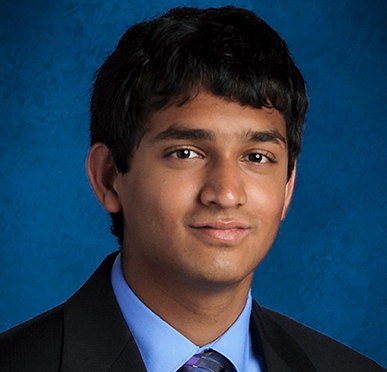
Vineet Kosaraju has been selected as a 2015 Davidson Fellow


The Davidson Institute of Talent Development has announced the 2015 Davidson Fellows. Among the honorees is 16-year-old Vineet Kosaraju of Saratoga, Calif. Vineet won a $10,000 Davidson Fellows Scholarship for his project, Towards Rational RNA Therapeutics: 3D RNA Engineering in a Massive Open Laboratory. He is one of only 20 students from across the country to receive this honor.

Vineet’s project focused on RNA, which is found everywhere in life from humans to bacteria. This molecule is relevant to current research not only because it is so prevalent in life, but also because it can be used to fight disease such as vision degeneration, create RNA vaccines, destroy viral genes, and combat cancer. However, it is being underutilized because trial and error is currently the method of choice to find new RNA therapeutics. Vineet created an interface that allows for the design of accurate 3D RNA molecules. “My project focuses on fixing the limitations of 2D RNA structuring by creating an interface to design 3D RNAs and discovering its folding rules so that scientists can design RNAs without using expensive trial and error processes,” Vineet said. “By analyzing RNA designs synthesized in vitro, I was able to create three rules that govern the stability of the tertiary structure, the first of their kind.”

Vineet is a rising senior at The Harker School in San Jose, Calif. Apart from learning from the advanced coursework at his high school, he enjoys his Stanford lab work, and volunteering and teaching at MathAndCoding, a non-profit he co-founded. Vineet hopes to attend a college that has, among numerous academic and extracurricular offerings, a strong computer science curriculum with an undergraduate research program.

Vineet serves on his local congresswoman’s student advisory board, and participates in his school’s Honor Council and Research Club. In 2014, he was a Siemens Competition regional finalist and has participated in the USA Computing Olympiad Gold Division for the past couple of years. When he is not busy with school and research, Vineet enjoys hanging out with friends and family, playing the piano, and enjoying a round of golf with his brother.

Sreya Vemuri wins prestigious $25,000 prize for work in math, science


Judges were impressed by Sreya Vemuri's research into how light travels through optic fibers.

Sreya Vemuri never expected that her research into how light travels through optic fibers would yield a result, let alone a $25,000 prize.

The 17-year-old Carmel High School student said she was stunned to learn she was named one of the 2015 Davidson Fellows by the Davidson Institute for Talent Development, a national organization devoted to nurturing intelligent youths and providing opportunities for them to develop their talents.

Vemuri is one of only 20 students across the country to receive this honor.

“I really just submitted it on a whim,” the senior said. “When I first started the research, I didn’t even expect to get results. I was really, really surprised when they informed me that I won.”

Vemuri, who has had a lifelong interest in math and science, said she is curious about the world, and that inquisitive spirit fueled her project. Vemuri’s work has applications in many areas of optics, such as making lasers, and has important applications in designing computers.

One of the judges who reviewed her work said it was on par with that of a college senior or graduate student, said Tacie Moessner, Davidson Fellows Scholarship program manager.

“One judge said that Sreya’s project is one of the best fundamental projects he’s ever reviewed — he’s been a judge for many years,” Moessner said. “Her application speaks truth about the quantum world, and that is of interest to any civilization, human or otherwise.

“That means it has huge implications for the future.”

Vemuri’s project stood out because of its subject matter, Moessner said. It was extremely complex and was a mathematical feat, she said.

“She was able to focus her research on this one particular problem and not get sidetracked or distracted by other things,” Moessner said. “She was able to have this narrow focus and delve deeply into it.”

Vemuri, who is the second Carmel student to place in the competition since 2011, said she’s undecided about where she’ll attend college and will use the $25,000 prize to help pay her tuition.

“Ever since I was a little kid, I’ve done math competitions, and I’ve been fascinated by how you can solve such complex problems using mathematics,” she said. “I’ve discovered that it’s exciting to solve an unknown problem that no one knows the answer to.

“For a moment, you’re the only person in the world who knows this science and this knowledge.”